Exclusive discounts on exquisite Banarasi sarees!

Traditional Banarasi Motiffs For Bridal Designs
Discover how traditional Banarasi motifs are reimagined into contemporary, minimal, and bridal‑heavy saree designs, blending heritage with modern aesthetics to create versatile, elegant pieces for every occasion.
silksupreme.in
12/20/20253 min read
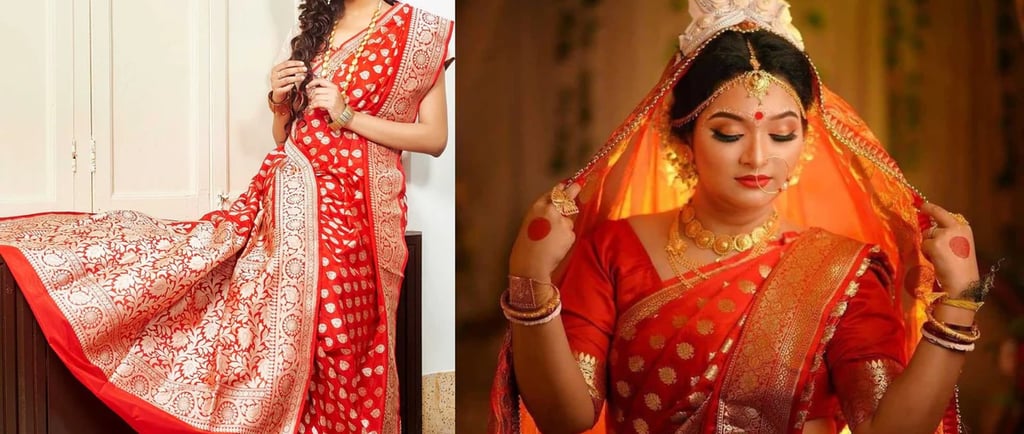
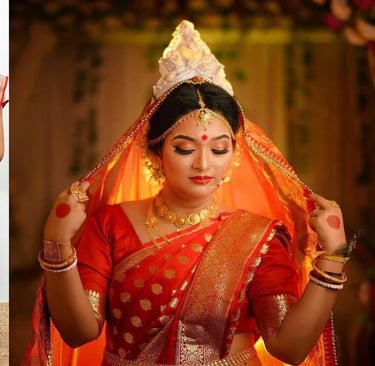
Adapting traditional Banarasi motifs to contemporary, minimal, or bridal‑heavy designs is one of the best ways to keep the craft relevant while still respecting its roots. This blog explores how to modernize classic Banarasi aesthetics without losing their soul.
Understanding traditional motifs
Traditional Banarasi sarees are full of motifs like butis, florals, paisleys, jangla patterns, and shikargah scenes that reflect Mughal, Persian, and Indian temple influences. These motifs were originally designed for royal and ceremonial wear, so they are naturally rich, dense, and highly ornamental.
Florals and vines (bel, jaal) express abundance and growth.
Paisleys and mango motifs often symbolise fertility, prosperity, and auspiciousness.
Shikargah and figure-based designs add storytelling and narrative to the textile.
Principles of modern adaptation
To adapt these motifs for today’s audience, the key is balance: preserve recognisable elements while changing scale, spacing, and colour. Modern customers often want comfort, versatility, and subtlety, but still value authenticity.
Simplify, don’t erase: keep the essence of a motif but remove excessive detailing.
Play with scale: large single motifs or very small scattered butis instantly feel fresher.
Use negative space: let the base fabric show, rather than covering the entire surface.
For contemporary everyday designs
Contemporary Banarasi pieces are ideal for office, small functions, and modern silhouettes like lehenga‑sarees or pre‑stitched drapes. Here, design must feel light, breathable, and easy to style with Western accessories.
Reduce jaal density: convert full jaal into border‑plus‑pallu with a mostly plain body.
Use geometric edits: reframe florals into stripes, checks, or linear borders.
Experiment with unconventional colours: greys, nudes, pastels, wine, and monotone looks using tone‑on‑tone zari.
For minimal and slow luxury looks
Minimal Banarasi Saree is about subtle richness—perfect for “quiet luxury” and younger buyers who like sarees but avoid heavy drama. The textile must speak through weave quality, fall, and small details rather than loud motifs.
Single motif focus: one hero motif on the pallu or border, with a plain or textured body.
Matte and soft finishes: use silk with less shine, matte zari, or tested zari to soften the look.
Long repeats and wider spacing: keep butis far apart for a clean, airier drape.
For bridal‑heavy reinterpretations
Bridal Banarasi still demands grandeur, but today’s brides often ask for comfort and uniqueness along with tradition. Instead of only weight and density, the focus can shift to storytelling, personalised colour, and smarter placement of heaviness.
Concentrated richness: keep heavy work on border and pallu, leaving the pleats relatively lighter.
Layered motifs: combine classic motifs (paisley + floral jaal + meenakari highlights) but restrict them to defined zones.
Custom bridal colours: move beyond pure red to deep maroon, rust, rose, rani, or dual‑tone weaves while keeping traditional motifs intact.
Working with weavers and designers
Successful adaptation depends on collaboration between designer, master weaver, card puncher, and the karigar on the loom. Clear communication about motif size, repeats, and desired “heaviness” ensures the final saree matches the design vision.
Start with pencil or digital sketches, then convert to graph paper for exact pick/peg mapping.
Test on small swatches first to see how scale and colour behave in actual weave.
Respect loom limitations while pushing for fresh layouts and proportions.
How brands can use these ideas
For a Banarasi brand or online store, adapted motifs can define a clear design language that sets the brand apart. Consistent styling and storytelling around these motifs builds recognition and trust.
Create theme‑based capsules: “Minimal Meenakari”, “Modern Shikargah”, “Heritage Bridal Jaal”, etc.
Use close‑up photos and videos to show how a traditional motif has been reimagined.
Share behind‑the‑loom stories so customers understand the craft value behind a seemingly simple saree.
If you share your target audience (age, budget, city/tier) and brand tone, a ready‑to‑publish blog draft can be structured with title, sub‑headings, and suggested photos tailored to your catalogue.
Silk Supreme
Explore our exquisite Banarasi sarees online store.
QUICK CONTACT
Elegance
Silk Supreme
8299234071
© 2025. All rights reserved.