

Banarasi sarees demand special attention because their silk and zari work are fragile. This banarasi saree care guide covers washing, maintaining, and preserving your Banarasi sarees so they last for generations.
Table of Contents
- Why Banarasi Sarees Need Special Care
- Dry Cleaning vs. Home Washing
- Step-by-Step Home Washing Method
- Protecting Color and Texture
- Proper Storage Techniques
- Ironing and Pressing Methods
- Stain Removal Tips
- Wearing and Handling Your Banarasi Saree
- Final Take
- FAQ
Why Banarasi Saree Care Needs Special Attention
Banarasi sarees from Varanasi are hand-woven with gold or silver zari threads woven directly into the silk base. This construction makes them different from regular silk fabrics. The silk fibers and metallic threads respond differently to water, heat, and chemicals, which is why they need specific care.
A 2019 survey revealed that 68% of silk damage cases were due to improper storage in plastic, which traps moisture and results in yellowing or fungal growth. Knowing what damages silk is the first step to protecting your saree.
[📸 Image Placeholder: Close-up of Banarasi saree zari work and weaving pattern]
-> Explore Banarasi saree collections on silk supreme
Dry Cleaning vs. Home Washing

Whether to dry clean or hand wash depends on your saree’s condition and composition.
Heavier Banarasi sarees with lots of zari work lose sheen if exposed to rough washing. Skip dry cleaning after every wear—once every 2 to 3 wears, or when you see a visible stain, is plenty.
Home washing, under banarasi saree care,works under strict conditions. For light stains, use mild detergent with cool water and blot gently. Never scrub, and avoid hot water or harsh chemicals.
| Cleaning Method | Best For | Frequency | Cost |
|---|---|---|---|
| Professional Dry Cleaning | Heavy zari, embroidery, stubborn stains | Every 2-3 wears | Higher |
| Home Hand Washing | Light stains, regular maintenance | As needed | Lower |
| Spot Cleaning | Minor marks, quick fixes | Immediately | Minimal |
Why Professional Cleaning Matters
Pure silk loses its “scroop” (that rustling sound and crisp texture) if dipped in water. Home detergents often have pH levels too harsh for natural silk. That’s why many experts recommend professional care for valuable pieces.
-> Professional care tips from silk supreme
Step-by-Step Home Washing Method
If your Banarasi saree is lightly soiled, follow these steps to minimize damage under banarasi saree care scheme.
Preparation and Testing
Test for color fastness first. Silk sarees are often dyed with colors that bleed during washing, so test a small, inconspicuous area (like the edge of the pallu) by dipping it in water and pressing it gently with a white cloth. If color transfers, take the saree to a professional.
The Washing Process
Fill a bucket with cold water and add a few drops of mild liquid detergent or baby shampoo. Submerge the saree and swirl it gently. Avoid rubbing, scrubbing, or wringing, as this causes fraying or stretching. It is special banarasi saree care technique.
[📸 Image Placeholder: Hands gently swirling Banarasi saree in cold water basin]
Limit soaking to just a few minutes. Long soaks lead to color bleeding and fabric weakening. Give special attention to Banarasi Saree Care technique.
Rinsing
Drain the soapy water and refill with clean, lukewarm water. Rinse gently to remove all detergent, and repeat until the water runs clear. No soap residue should remain.
Removing Excess Water
Never wring your saree. After rinsing, lift it out carefully. Place the saree between two clean, dry towels and press gently to absorb excess water. Banarasi saree care technique.
-> View more Banarasi Georgette Sarees on silk supreme
Protecting Color and Texture
Your saree’s color and feel depend on how you handle it throughout its life.
Color Preservation Strategies
Natural dyes used in authentic pieces are more sensitive than synthetic alternatives and require gentle treatment. Protect them from UV light exposure.
Avoid direct sunlight. Never hang a silk saree to dry in direct sunlight—this fades the color. Instead, lay it flat on a clean, dry towel or hang it on a padded hanger in a shaded, well-ventilated area. New Banarasi Saree Care technique.
Maintaining Texture and Sheen
Silk has memory. If you keep folding it the same way, permanent creases form. Change your folding pattern occasionally to maintain its shape. Banarasi Saree Care technique.
[📸 Image Placeholder: Banarasi saree draped to show texture and sheen]
A traditional remedy restores lost shine. Mix distilled white vinegar and lukewarm water (1 tablespoon of vinegar per litre of water) and soak the saree for 3-5 minutes. This helps reset the natural pH of the silk fibers.
outbound link :- https://en.wikipedia.org/wiki/Silk?utm_source=chatgpt.com
Proper Storage Techniques
Storage is where many sarees suffer irreversible damage. The wrong environment causes yellowing, fungal growth, and zari tarnishing within months.
The Muslin Cloth Method
Wrap your saree in soft, breathable muslin or cotton cloth. This allows natural fibers to breathe while protecting them from dust and light. Never use plastic covers—they trap moisture and turn zari black.
Storage Location Requirements
Keep your saree in a cool, dry, dark space away from direct sunlight. Wrap it in muslin or pure cotton material that allows the fabric to breathe while preventing dust and moisture from entering.
Folding and Refolding
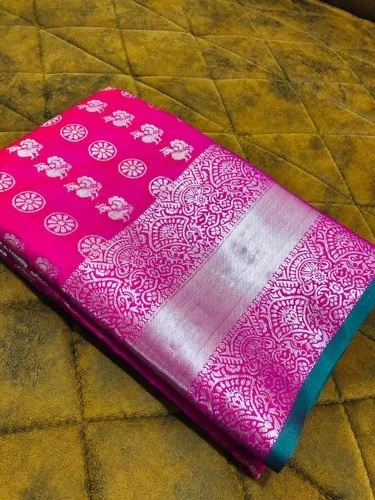
Fold along the original creases to avoid excessive folding lines. Use acid-free tissue paper between folds to prevent creasing and protect delicate areas.
Change folding lines every 6-12 months to prevent permanent creases. Extended hanger storage causes problems. The heavy zari borders pull down on the silk, stretching and distorting the saree’s shape.
[📸 Image Placeholder: Properly folded Banarasi saree wrapped in muslin cloth]
Pest and Moisture Control
Use neem leaves or silica gel packs in your storage area to keep insects away naturally. Replace silica gel packs periodically to control humidity. Add natural repellents like neem or cedarwood (not mothballs) to deter pests.
-> Discover Banarasi Party wear Sarees on silk supreme
Ironing and Pressing Methods
Wrinkles happen, but incorrect ironing damages zari and silk fibers permanently.
The Reverse-Side Technique
Always iron on the reverse side. This protects the detailed zari work from direct heat, which dulls it or turns it black. Never iron the pallu or border directly.
Heat and Protection
Place a thin, white cotton cloth between the iron and the saree. High heat damages delicate silk threads, making them dry and breakable. Use the lowest silk setting, ideally on the reverse side with cotton cloth between iron and saree.
Steam is gentler. Use a handheld steamer to smooth creases without applying direct heat.
Steam as an Alternative
Steaming is often safer than ironing for heavily embellished sarees. Avoid ironing metallic threads or zari-laden pieces. Instead, gently steam the fabric to remove creases without flattening the weave.
Stain Removal Tips
Quick action matters when stains occur. The method depends on the type and age of the stain.
Fresh Stains
Don’t rub or scrub. Use a damp cloth to blot the stain gently and take it to a professional if needed.
For light stains at home, spot clean using a soft cloth soaked in mild detergent mixed with cold water. Pat the stained area gently without rubbing, which damages both silk and zari.
Stubborn Stains
For larger or stubborn stains—makeup like lipstick or foundation, oil-based stains, food spills, or significant discoloration—seek professional cleaning. Attempting removal at home may damage the fabric, fade color, or set the stain deeper. Professional dry cleaners have specialized techniques for silk garments.
[📸 Image Placeholder: Expert stain removal on delicate Banarasi fabric]
Wearing and Handling Your Banarasi Saree
Proper care extends beyond washing and storage to how you wear and handle the saree.
Before Wearing
Apply perfumes, hairsprays, and cosmetics before draping your saree. This prevents accidental spills and stains.
During Wear
Sharp jewelry gets caught in fine silk threads. Opt for smooth accessories instead. Handle the saree gently when draping, and don’t pull or tug on the fabric around the pallu, especially where there’s heavy zari work.
After Wearing
Let your saree rest between wears. Air it out completely in a shaded, well-ventilated space before folding it for storage. This prevents odor accumulation and allows moisture to evaporate naturally.
-> Explore the finest Banarasi Bandhni sarees on silk supreme
Final Take
Caring for your Banarasi saree shows respect for the artisans who created it and the heritage it represents. With these techniques, your piece stays beautiful and lustrous for decades, becoming a true heirloom passed down through generations. The effort you invest today in proper washing, storage, and maintenance ensures your Banarasi saree continues to tell its story with grace.
Explore Fastest Selling Banarasi Bridal Semi Silk Sarees
FAQ
Can I wash my Banarasi saree in a washing machine?
No. Even on a delicate cycle, machine washing tears silk threads and dulls zari sheen. Machine washing applies pressure and friction that hand washing avoids, making it unsuitable for handloom pieces.
How often should I dry clean my Banarasi saree?
You don’t need to dry clean after every wear. Once every 2 to 3 wears, or when there’s a visible stain, is enough. Over-cleaning wears down the fibers unnecessarily, so reserve professional cleaning for when it’s truly needed.
What should I do if my Banarasi saree’s zari looks dull?
Gently wipe it with a very soft, dry cotton cloth to restore some luster. Avoid using any chemical polishes or abrasive materials, as these irreversibly damage both the zari and silk fabric.
Is it safe to store my Banarasi saree in a wooden box?
Yes. Use a wooden or plastic storage box lined with cotton fabric to create a safe environment. Wooden boxes allow better air circulation than plastic alone, though the cotton lining prevents direct contact with the wood.
How can I tell if my Banarasi saree has color-fast dyes?
Test a small, inconspicuous area (like the edge of the pallu) by dipping it in water and pressing gently with a white cloth. If the color transfers, avoid washing at home and opt for professional dry cleaning instead.
What’s the best way to remove perfume stains from my saree?
Prevention works best. Apply perfume before draping your saree. If a stain occurs, blot gently with a soft cloth dampened in cold water. For stubborn perfume stains, professional dry cleaning is your safest option, as alcohol-based perfumes can permanently damage silk if treated incorrectly at home.
How do I prevent zari from tarnishing during storage?
Store your saree wrapped in muslin or cotton cloth in a cool, dry, dark space. Never use plastic covers, as they trap moisture and cause zari to tarnish. Add neem leaves or silica gel packs to control humidity and prevent oxidation.
Can I use regular detergent to wash my Banarasi saree?
No. Regular detergent is too harsh for silk. Use only mild liquid detergent or baby shampoo mixed with cold water. Regular detergents have high pH levels that damage natural silk fibers and can strip color from the fabric